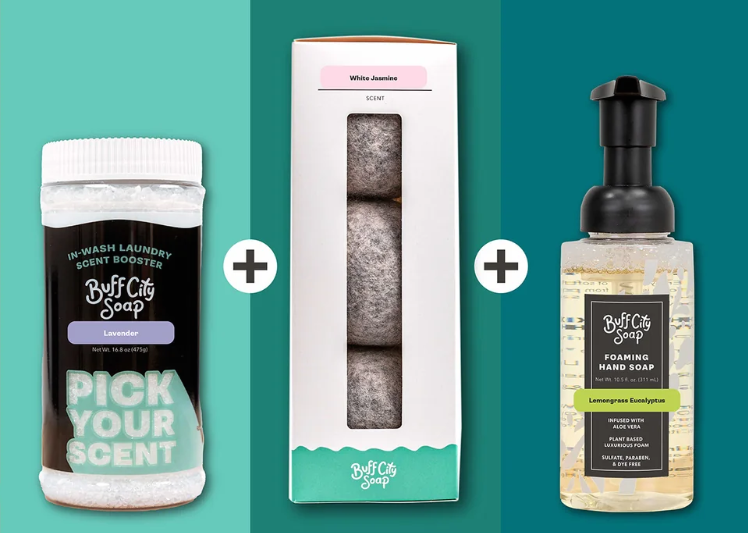
$1O BUILD YOUR BUNDLE
Choose your favorite Dish Soap,Multi-Surface Cleaner,& Foaming
Hand Soap!



NEW& POPULAR

New Products

New Products
New Products

New Products
New Products
New Products

New Products

New Products

New Products

New Products

New Products

New Products
SHOP BY CATEGORY



The modern focus on cleanliness has shifted, moving beyond mere surface aesthetics to incorporate deeper considerations of sustainability, ingredient transparency, and environmental impact. The substances we use to maintain our indoor environments have a lifespan that extends well past their application, influencing air quality, water systems, and the materials they interact with. A responsible approach to household maintenance now requires a more informed selection of cleaning agents.
A major area of evolution is the preference for agents derived from plant-based and mineral sources. This movement is driven by a desire to reduce the reliance on substances that can persist in the environment or generate volatile organic compounds that affect indoor air quality. Formulations utilizing ingredients sourced from renewable resources, like coconut or corn, for their surfactant properties, are becoming increasingly favored. These natural derivatives often exhibit biodegradability, meaning they can be broken down naturally by biological processes after disposal, minimizing their long-term environmental footprint on waterways and soil. The choice of such agents reflects a commitment to cyclical living, where the act of cleaning does not compromise the health of the broader ecosystem.
The principles of effective and sustainable cleaning also extend to the concept of concentration. Highly concentrated formulas, which require the user to dilute them with water prior to use, are a simple yet profound step towards responsible consumption. By minimizing the water content in the original package, these substances significantly reduce the overall mass and volume of the product that must be manufactured, shipped, and stored. This translates directly to less energy consumption in transport and a reduction in packaging material waste. The consumer, in effect, becomes part of the responsible supply chain by performing the final step of dilution at the point of use, making each purchase a more resource-efficient transaction.
Another vital element in the discussion of effective cleaning is the choice of solvent. While water is the universal solvent and a primary component of many cleaning agents, specialized formulations sometimes use other media to tackle unique cleaning challenges. For example, some cleaning applications benefit from the action of natural spirits or compounds derived from citrus fruits. These alternative solvents can be highly effective at dissolving specific types of soils, like adhesives or certain types of pigmented stains, without resorting to harsher, less desirable compounds. The selection of a suitable solvent is a technical decision, balancing performance against concerns for user safety and ecological persistence.
The efficacy of any cleaning substance is also tied to proper application technique. A common mistake is the over-application of the agent, assuming more product equals a better clean. In many cases, using more than the recommended amount is wasteful and can actually leave behind an unnecessary residue that attracts new dirt more quickly—an issue known as re-soiling. The key is to allow the chemistry time to work. Dwell time, the period during which the agent remains in contact with the surface and the soil, is crucial. Allowing an agent a few moments to penetrate and break down the grime, rather than immediately wiping it away, often proves far more effective and requires less physical scrubbing and less product overall.
Ultimately, a truly effective cleaning regimen is holistic, integrating the smart selection of the cleaning agent with informed usage practices. It is a mindful process that prioritizes health and the environment without sacrificing performance. The future of a spotless home is intertwined with the future of the planet, requiring us to embrace innovation and transparency in the cleaning products we select. From the molecular structure of the surfactants to the careful consideration of the product’s lifecycle, every detail plays a role in creating a cleaner, safer world for generations to come. This careful selection and application ensure that the quest for cleanliness is achieved with the highest possible level of responsibility and ecological awareness.